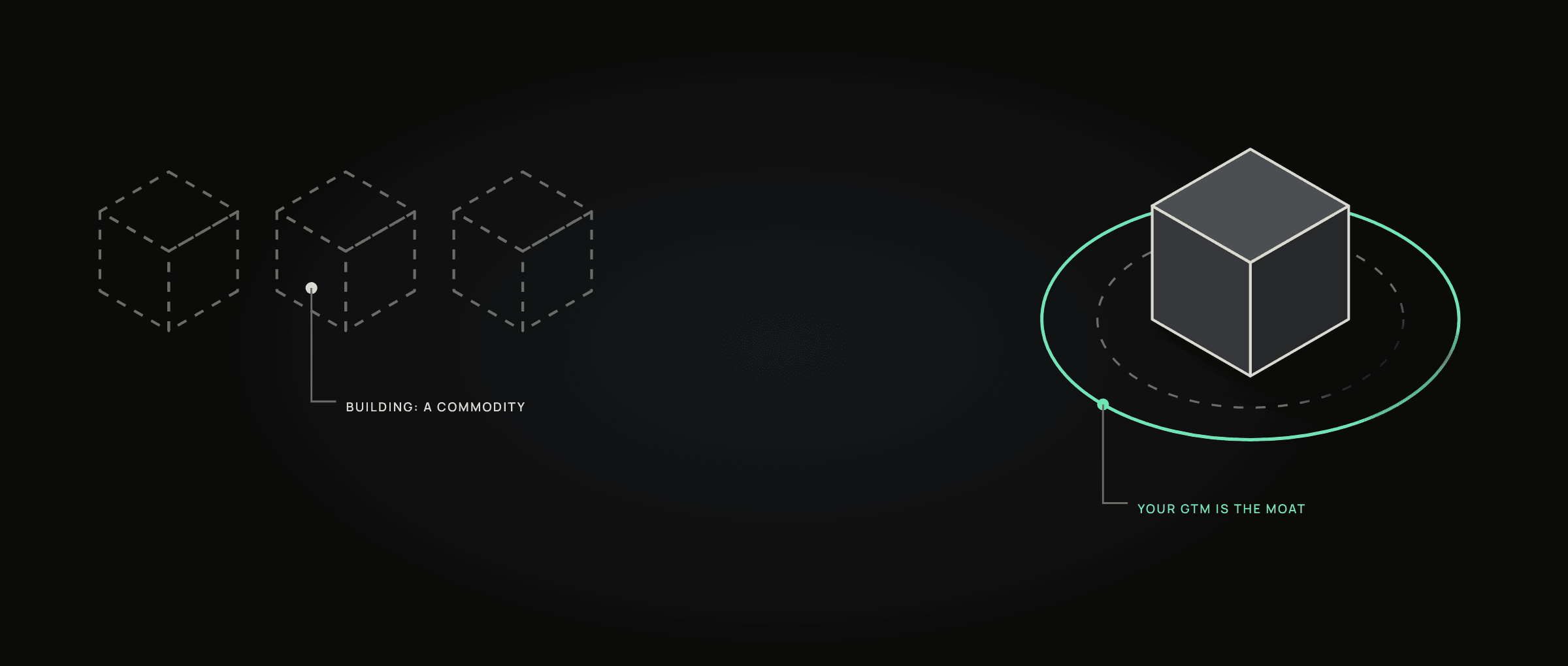
Building a product became a commodity.
Uncomfortable, but look at one quarter in my own network:
An agency founder scaled to $7M ARR in 3 years, then said publicly that Claude Code made half of his own GTM stack obsolete. His words, not mine. (That's Michel Lieben.)
A solo founder went from vision to launched product in eight months. Three clients live on day one.
An ex-investment manager with zero engineering background now ships AI agents that automate PE workflows. From a laptop.
The build barrier is gone. What used to need a CTO, a roadmap and 18 months now needs a clear head and a few weekends.
Which means the value moved.
Peter Thiel wrote it in 2014: "Poor distribution, not product, is the number one cause of failure."
Justin Kan compressed it into one of the most quoted GTM lines ever: first time founders are obsessed with product, second time founders are obsessed with distribution.
Back then it was advice. Now it is arithmetic. When everyone can build, the product stops being the differentiator. By definition. That is what commodity means.
That solo founder with three clients on day one? It wasn't the product. She knew every buyer in her niche personally. THAT was the product.
So the uncomfortable question for Q4: if a competitor clones your product next quarter (they can), what exactly do you still own?
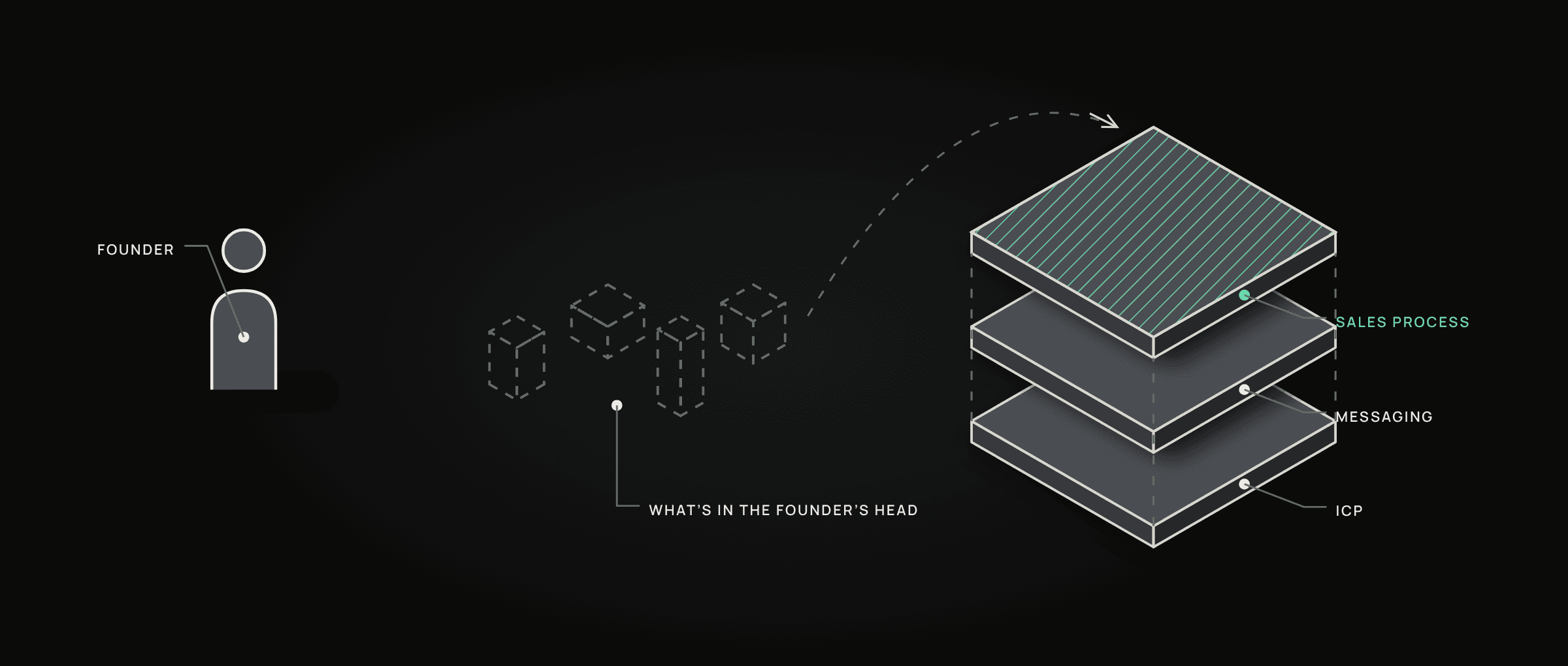
Your ICP knowledge. Your channel. Your network. Your credibility. Your motion.
Your GTM is the moat now.
Distribution didn't become important. It became the whole game.
What's your distribution edge that a weekend of vibe coding can't copy? Tell me below.