A founder asked Claude to do his product's job.
It got about a quarter of the answers wrong.
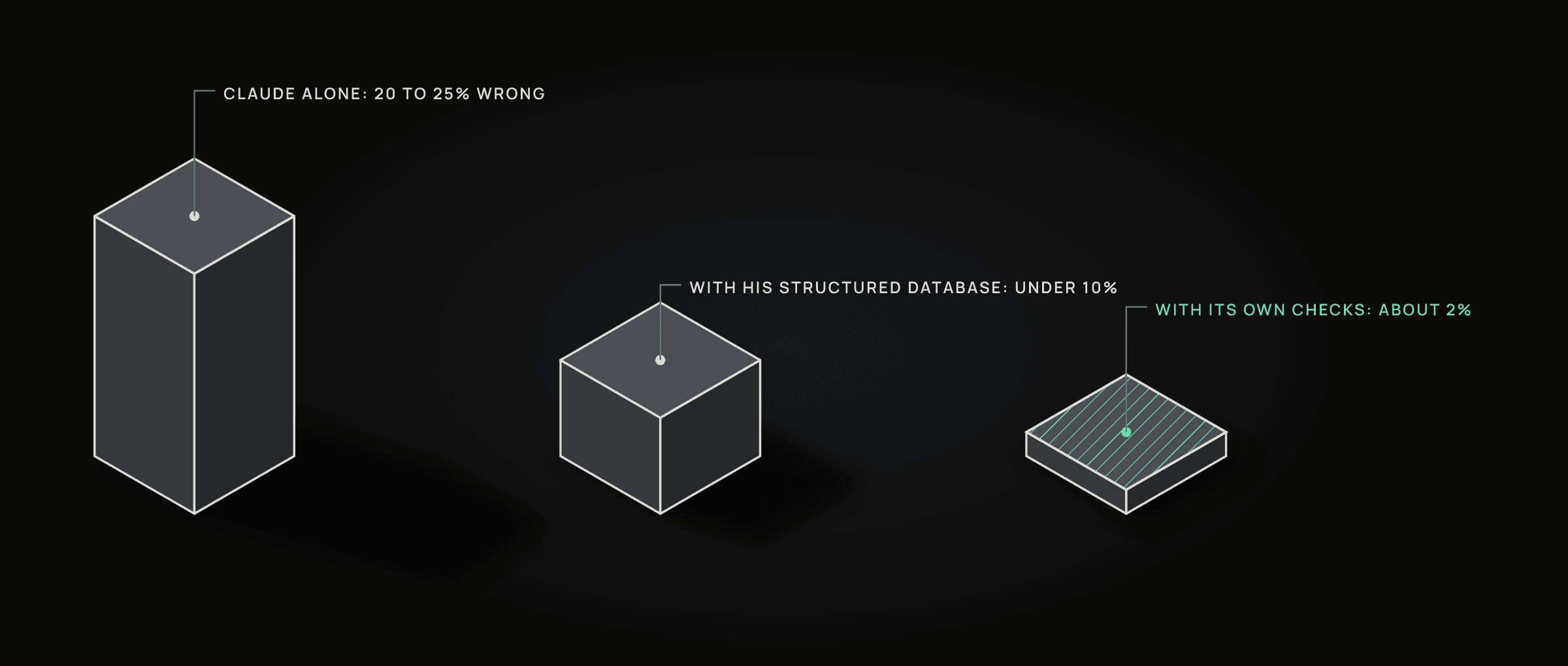
His own test, on about ten jurisdictions:
→ Claude alone: 20 to 25% wrong.
→ Claude fed with his structured database: under 10%.
→ His database with its own checks: about 2%.
He spent twenty years in his industry before writing a line of code. That's the part a model can't copy over a weekend.
The difference between 25% and 2% isn't a better model. It's the checks built into his data, by someone who knows where the exceptions are.
When anyone can build a product with AI, the moat isn't the code anymore. It's the context you collected over years, plus the structure you put on it.
Same rule in go-to-market.
AI outbound only pushes what you feed it. Feed it the wrong context and it sends the wrong message, faster.
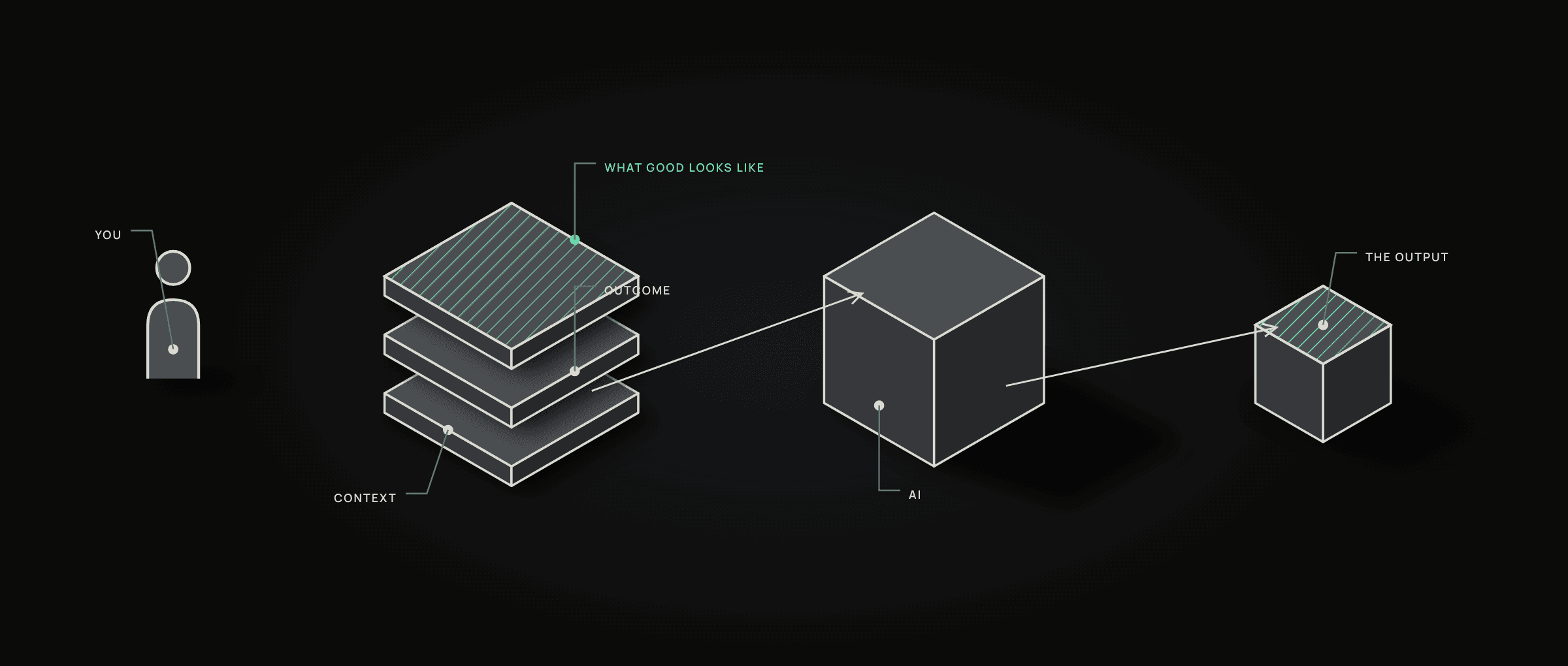
So the order is: gather the context with the founder, structure it into the GTM foundations, then let the AI push.
And the context for a GTM isn't exotic. Who buys. Why now. What they compare you to. The words they use for the problem. The deals you lost and why. Most founders have all of it, in their head and in their call recordings. Almost nobody has it written in a structure an AI can use.
Same morning, two calls, opposite order of work.
One founder built fast with AI, never checked demand, cut the team. Still at zero revenue.
The other built what he needed from his own work. Two licences sold from his first 12 leads, without a call.
His product, in his words: "very boring, but very targeted at professionals."
Boring with real pull beats exciting with none.
What do you know that the model doesn't, and is it written down?