Signed contract. Champagne. On to the next deal.
Meanwhile, the customer you just closed is sitting there with a login and a question: now what?
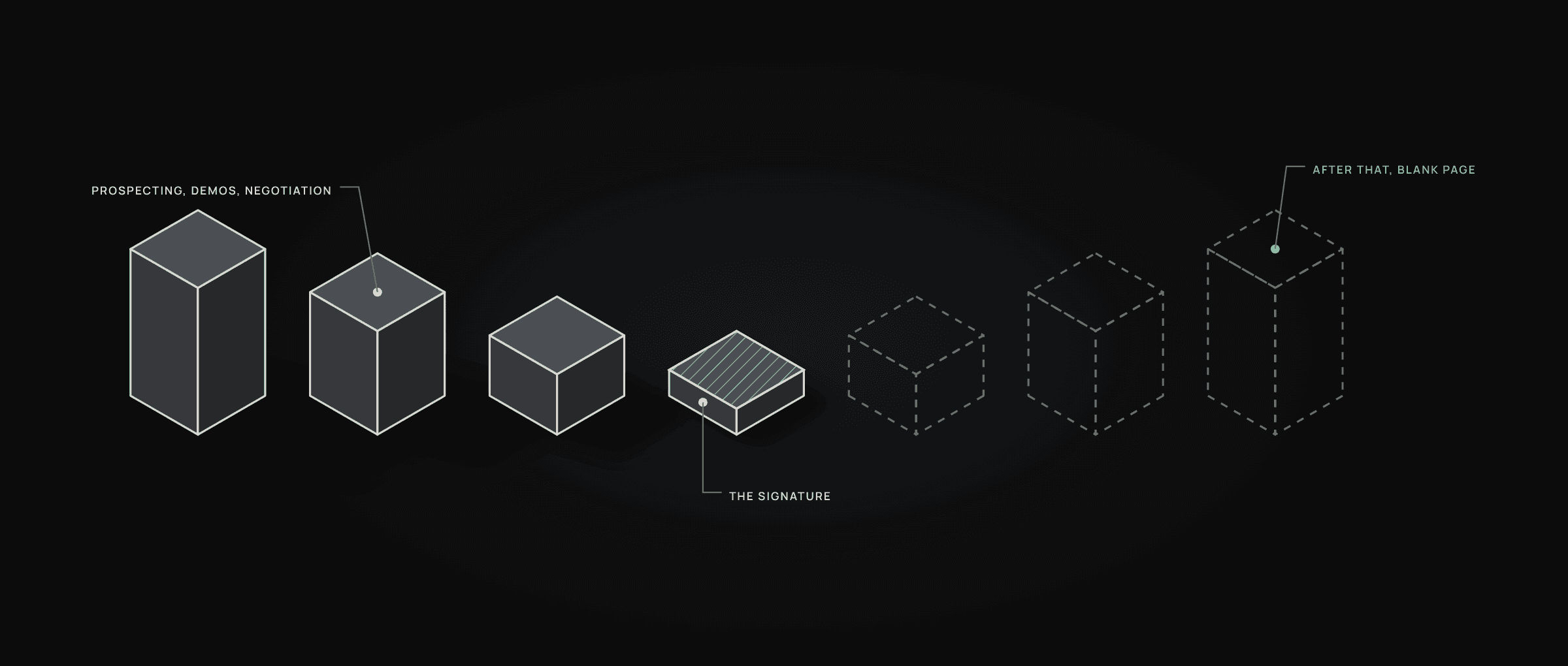
Saw it twice this month with clients. The customer journey is mapped beautifully up to the signature. After that, blank page.
Here's what the blank page costs:
Onboarding stalls. Weeks chasing data, because the champion who signed the deal is never the person who owns the data.
Churn starts brewing on day one. Silently. You'll find out at renewal, which is 11 months too late.
Expansion never happens, because nobody is there to notice the moment the customer is ready for more.
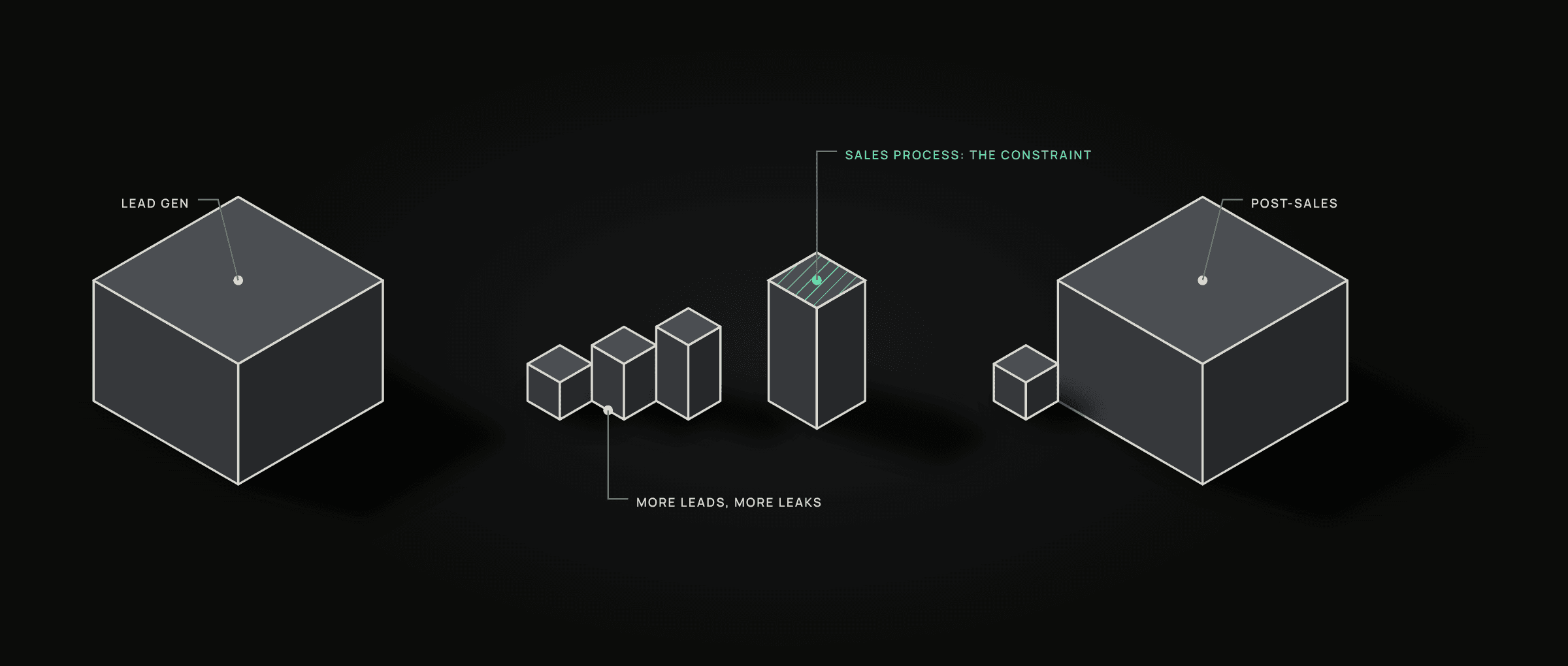
Winning by Design draws the customer journey as a bowtie. The signature is the knot in the middle. Everything you obsess over, prospecting, demos, negotiation, is the left side. The money that decides whether you hit EUR 5M ARR is on the right: onboarding, adoption, expansion, renewal.
Most founders run half a bowtie.
The fix we put in place, two moves:
- Technical handover at signature. The last sales meeting includes the person who owns implementation on the customer side. Not "we'll be in touch". A name, in the room.
- A Joint Impact Plan. First 90 days, milestones with dates and owners on BOTH sides. The customer commits to work too. The momentum from the sales cycle survives the signature.
Too early for the numbers, we shipped this in September. Not too early for the change in energy: onboarding calls now have dates in them instead of "we'll see".
The deal isn't won at the signature. It's won in the 90 days after.
Honest question: the day after a deal closes, who owns that customer in your company? If you can't name one person, you have your answer.